The Critical Sense
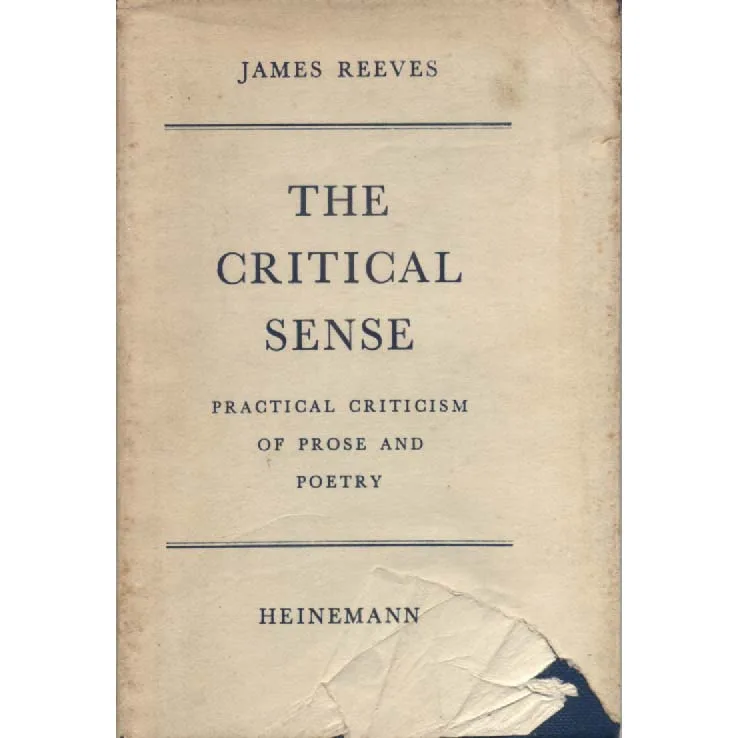
Publisher: Heinemann Educational Books
Format: Hardback
ISBN: none
In a world where the term “critical sense” is thrown around as casually as a soggy biscuit at a tea party, James Reeves emerges in 1968 with a collection of thoughts that might just have you questioning your own faculties. Published by Heinemann Educational Books, this tome seeks to navigate the murky waters of intellectualism with all the grace of a hippo in a tutu. With no ISBN to be found, one could speculate that the book is either an avant-garde masterpiece or the result of a rather ambitious typographical error.
Hardback, hardly read, reasonable dustcover with some tears to front as seen.
Ex-schoolbook from Forest Hill School, Dacres Road, SE23
Fear not, dear reader! For within these pages lies the essence of an era that was continuously trying—not always successfully—to make sense of its own critical abilities. Reeves, a man undoubtedly blessed with the kind of insight that could make a potato blush, dives headfirst into the intricacies of perception, evaluation, and the peculiar quirks of human thought. The reader is invited to ponder what it means to possess a sense so critical, one might wonder if that ever-so-polite British sensibility is merely a facade cloaking a simmering pot of existential dread.
As you leaf through the slightly yellowed pages, you will encounter a narrative that begs the question: Is the critical sense a blessing or a curse? Reeves appears to suggest it’s both, like a two-headed coin tossed into the fountain of enlightenment—which, by the way, is probably best avoided during British summertime thanks to the delightful charm of unpredictable weather.
Expect a delightful mélange of cerebral gymnastics and an undercurrent of irony that dances throughout the text like a cat on a hot tin roof. You might find yourself chuckling—albeit nervously—at the various theories and musings presented, all while wondering if you’ve accidentally stumbled into a philosophy lecture hosted by a particularly eccentric uncle. It’s as if every page whispers, “Isn’t it just delightful how utterly baffling life can be?”
Condition: Good, if you don’t mind the occasional coffee ring or the ghost of a past owner whose critical sense may have been sharper than their tea-brewing skills. The cover shows modest wear, possibly from being leaned upon during an impassioned debate at a village hall meeting. The spine, though cracking slightly with age, remains resilient—much like the British spirit itself. There might even be a few marginal notes scattered throughout, offering glimpses into the inner dialogues of long-forgotten thinkers who dared to grapple with the questions of the universe over a pint.
As you embrace this curious relic of the past, prepare yourself for a journey that weaves through the playful absurdities of the British intellect. The book is sure to tickle your brain and leave you pondering the very nature of thought itself. Will reading it grant you the coveted ‘critical sense’ or merely shatter whatever illusions you had left? Only one way to find out!
In the end, “The Critical Sense” stands as a testament to a time when educational books were not merely conduits of knowledge but delightful dives into the whimsical chaos of human understanding. So grab your monocle, adjust your tweed jacket, and prepare to feast on the irony served up on platters of philosophical ponderings. All in a good day’s work, courtesy of Crappy Old Books—where the old and quirky come together to redefine what it means to read with a sense of humor.
Keep browsing: See more Academic books Other books by James Reeves